
September 2026
Newsletter

In this issue
- Supporting Rural Mental Health
- We all have our ups and downs in life. Supporting each other can make a real difference.
- Work and Protective Clothing: What You Can Claim
- A look at the tax rules around work and protective clothing and what businesses can and cannot claim.
Stronger Together in Our Rural Community
R J Preston Ltd is sponsoring Robbie’s Mind Matrix 6hr Farm Bike Challenge to help raise funds for rural mental health.
We all go through ups and downs in life and sometimes life can be harder than we expect. Having the support of family, friends, colleagues and our wider community can make a real difference.
Looking out for each other, having a chat and being there when someone needs support are simple things that can mean a lot.
If you would like to take part or find out more about the event, visit Robbie’s Mind Matrix 6hr Farm Bike Challenge.
Farm Clothing and Protective Clothing: NZ Tax Rules

Introduction
In this month’s article, we look at the tax treatment of work clothing and protective clothing, particularly for farming businesses. It is quite common for farmers and farm employees to wear specific clothing while working, but not all of it can automatically be claimed as a business expense.
We look at the difference between ordinary clothing, genuine work clothing and protective clothing, as well as the FBT rules where clothing is provided to employees or shareholder employees. We also cover wet weather allowances, reimbursements and some of the different rules that can apply to LTCs.
Farm clothing and protective clothing: what can you claim?
Work clothing is a common business expense, but not all clothing worn at work is tax deductible. The key distinction is between ordinary private clothing, genuine work clothing and personal protective equipment (PPE).
Ordinary clothing
Ordinary clothing is generally a private expense, even if it is worn mainly or entirely while working. This includes things such as:
- Jeans
- Shirts and T shirts
- Jerseys
- Jackets
- General purpose footwear
The fact that clothing gets dirty or wears out because of work does not, by itself, make it deductible.
Protective clothing and PPE
The position is different where clothing is genuinely protective and is needed to manage a workplace health and safety risk.
Examples include:
- Protective overalls
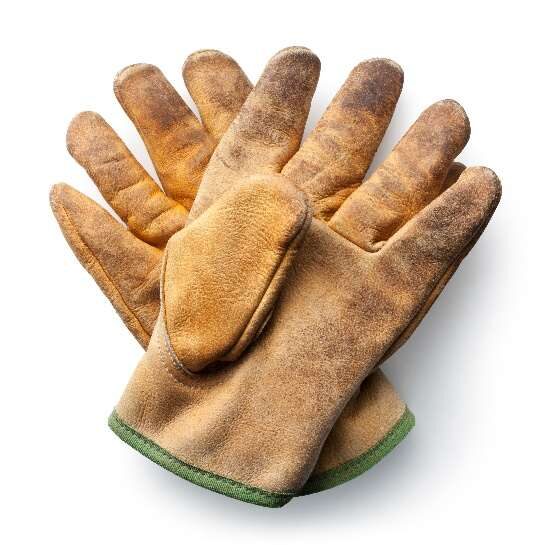
- Protective gloves
- Safety footwear
- High visibility clothing
- Hard hats
- Chemical protection
- Other specialist protective clothing
The important question is whether the item is being used to protect the employee from a workplace risk and is connected with the employer’s health and safety obligations.
Inland Revenue’s guidance confirms that PPE, including protective and high visibility clothing, can be covered by the health and safety FBT exemption. The PPE does not need to have the business’s logo or branding.
Work Uniforms
Genuine distinctive work clothing can also qualify for an FBT exemption. This can include clothing that forms part of a uniform and is clearly associated with the business.
However, simply putting a small logo on ordinary clothing does not automatically make it exempt. The type of clothing and whether it could reasonably be used privately still need to be considered.

Fringe Benefit Tax (FBT) and shareholder employees
A shareholder employee is still an employee for FBT purposes. Being a shareholder does not mean that clothing or other benefits can automatically be provided without considering FBT.
For work clothing, the treatment generally depends on what is being provided.
Genuine PPE required for workplace health and safety:
Generally exempt from FBT where the requirements are met.
Distinctive work clothing (uniforms):
May be exempt if it meets the requirements for work clothing.
Ordinary clothing:
If the company provides ordinary clothing that can be used privately, FBT may apply.
It is also important to know whether the shareholder employee is a major shareholder. Generally, a person is a major shareholder if they own or control 10% or more of the company’s shares or voting interests.
This can affect the FBT rate when benefits are pooled rather than attributed to a particular employee. For the 2026 tax year, pooled benefits are generally taxed at 63.93% for major shareholder employees and 49.25% for other employees.
There is also an FBT threshold for certain benefits. For certain unclassified benefits, the general limit is $300 per employee per quarter, subject to the other conditions and the employer’s overall limit. The annual limit is generally $1,200 per employee, with a separate employer wide limit of $22,500 a year.
These thresholds do not apply to every type of fringe benefit. Different rules apply to benefits such as motor vehicles, low interest loans and employer provided accommodation.
For clothing, the first step is therefore to consider what type of clothing is being provided. Genuine PPE and qualifying work clothing may be exempt from FBT, while ordinary clothing with a private benefit may result in FBT.
Look-through companies
A different approach applies to a look-through company (LTC).
An LTC shareholder who qualifies as a working owner is treated differently for FBT purposes. A working owner is not treated as an employee for FBT purposes, so the normal FBT rules do not apply to benefits provided to that working owner in the same way as they do to an employee of an ordinary company.
Wet weather allowance
A wet weather allowance is commonly used by many of our farming clients, as farm employees often work outdoors and may need to continue working in rain and other adverse weather conditions. However, it is not a statutory entitlement with a standard rate under New Zealand law. Whether an allowance is paid and the conditions that apply will depend on the relevant employment agreement, collective agreement or workplace policy.
For tax purposes, the main thing is what the allowance is actually being paid for. If it is to cover the cost of wet weather gear that the employee needs for their work, it can generally be paid tax free. If it is an extra payment for having to work in rain, cold, mud or other unpleasant conditions, it is taxable and PAYE needs to be deducted.
The employer does not necessarily need receipts for every payment. A reasonable estimate can be used based on the cost of the gear, how often it needs to be replaced and any repair costs. The employer should keep the calculation and supporting information on file.
If the allowance paid is more than the reasonable cost of the wet weather gear, the excess will be taxable. If part of the allowance is for the gear and part is for working in unpleasant conditions, the payment should be split between the tax free and taxable amounts.
So, if the intention is to pay the allowance tax free, it should be based on the actual or reasonably estimated cost of necessary wet weather gear, rather than being a general payment for working in bad weather.
The simple rule
When looking at work clothing, three questions are useful:
1. Is it ordinary clothing that could reasonably be worn privately?
If yes, it will generally be a private expense.
2. Is it genuine protective or specialist clothing required because of the work or a workplace risk?
If yes, there is a much stronger basis for claiming it as a business expense and where it is provided to an employee, it may also be exempt from FBT.
3. Who is receiving it?
If the clothing is for a sole trader or partner, the normal business expense rules apply. If it is provided to an employee, shareholder employee or an LTC working owner, the specific FBT and shareholder rules should be checked rather than assuming the normal employee rules apply.
The important thing to remember is that income tax, GST, PAYE and FBT are separate questions. Before deciding how clothing should be treated, consider what the item is, why it was purchased, who receives it and whether there is any private benefit.
If you need further advice or assistance with the tax treatment of work or protective clothing, please feel free to contact James, Grant, Chathu or any member of our team. We are happy to help you work through the rules and make sure the treatment is appropriate for your business.