
October 2026
Newsletter
In this issue
- El Niño 2026/27: Plan Ahead
- Dryer, warmer and windier? Let’s prepare for what summer may bring.
- Management and Strategies in an El Niño Event
- Water and irrigation, feed, fertiliser, livestock, financial planning, tax and the Income Equalisation Scheme.
- El Niño and the Effects on Your Mental Health
- The pressure a dry season puts on farming families, and where to find help.
- Farming After an El Niño Event
- Pasture recovery, capital stock management and the financial reset.
- Summary
- The effects of the cycle can be mitigated by early planning.
El Niño 2026/27: Plan Ahead
Dryer, warmer and windier? Let’s prepare for what summer may bring.
Commonly known as the Super El Niño, the impending El Niño event that is expected to occur in late 2026 and into 2027 is probably one of the most talked-about events within agricultural circles, but also now more nationally in the public domain.
What Causes an El Niño?
An El Niño is caused by a major shift in the tropical Pacific Ocean currents and atmospheric winds and is a naturally occurring cycle.
Under normal conditions, strong trade winds blow from east to west along the equator, pushing warm surface water towards Asia and Indonesia. However, during El Niño, these trade winds weaken or can reverse, allowing the pool of warm water to shift towards the central and eastern Pacific, closer to South America.
We will feel the effects of El Niño in the South Island. It is expected that the greatest intensity of El Niño will reach its peak in November/December 2026, with the duration of El Niño not expected to dissipate until April/May 2027.
Regional Forecast: What El Niño 2026/27 Could Mean for New Zealand?
Firstly, northern and eastern regions of New Zealand, including Canterbury are expected to experience drier than normal conditions, elevated temperatures and an increased risk of dry soils and wildfires through spring and summer.
Western areas of the lower South Island could potentially experience more active and stormy weather patterns during the 2026/27 El Niño event, with frequent fronts bringing higher than average rainfall and an increased risk of flooding.
For farmers and rural businesses, understanding how El Niño could affect regional rainfall, soil moisture and weather conditions will be important when planning for the spring and summer months.
Wind Conditions
Much of the country is expected to experience windier than usual spring, driving very hot temperatures in the east.
A typical Norwest setup brings very wet conditions in the west and very dry conditions in the east, along with high winds. However, the dryness is expected to be a lot worse under El Niño conditions, particularly across eastern areas of the South Island.
Management and Strategies in an El Niño Event
Water and Irrigation Management
1. Anticipate early E-Can restrictions.
Lowland river takes will likely face swift shutoffs and severe minimum flow restrictions as regional river levels drop.
2. Optimise stored water assets.
If you operate a scheme storage or on-farm dams, manage these reserves prudently. Early in spring, fill storage buffers as soon as possible while takes remain unrestricted.
3. Prepare for unpredictable deluges.
This is a unique cycle. Warmer ocean temperatures often mean that the atmosphere can hold more moisture. While Canterbury could be overwhelmingly dry, occasional fast-moving westerly fronts can trigger brief, heavy downpours that need to be managed.
Feed Management
Do your feed budgets early and source external supplements to meet those feed deficits, helping to avoid market price spikes.
Front Load Spring Fertiliser
Apply urea and key crop nutrients early in the spring while there is still residual winter moisture in the soil.
Smart Fodder and Crop Selection
For arable or supplementary cropping, match your hybrid populations and planting depths to the realities of a high-dryness season. Prioritise early crop establishment to encourage deep root systems before the top-soil layers dry out.
Livestock Strategies
Establish clear destocking triggers. Define strict dates and body condition score milestones for trigger events.
Decide early when to finish lambs, when to move store stock on, when to cull lower-producing stock or, if possible, arrange off-farm grazing.
Mitigate Animal Heat Stress
Relentless hot Norwest winds can elevate thermal stress. Audit your paddocks for natural shade, ensure high-flow water troughs are functioning and plan to shift demanding stock to protected blocks.
Financial Planning
Financial planning during a Super El Niño is somewhat different because the primary risk to your bottom line isn’t just the drop in physical farm yields; it is the rapid escalation of input costs combined with shifting market payout metrics.
It is here that budgeting becomes important. Prepare budgets looking at a few different scenarios, including different payout scenarios. This is easily done in the dairy scenario. Within a stock scenario, prepare your budget based on having to sell stock that would normally be fattened at store prices.
To avoid budget blowouts, pre-purchase as many of the key inputs as you think you will require for the season as early as possible. In this way, you can set your price and lock in supply contracts for supplementary summer feed and even fertiliser purchases before the spot markets experience peak seasonal surges.
Share your updated scenario budgets with your bank manager before you need any extension of credit. Arranging a seasonal overdraft facility or structuring interest-only payments on term debt is far easier when done proactively. Again, keep your accountant in the loop here as well, or get them to assist with the budget.
Taxation
If your end-of-year cash analysis drops significantly below your opening expectations, ring your accountant so that we can lodge an immediate provisional tax re-estimation with Inland Revenue. This prevents you from paying tax instalments based on last year’s high historical profit and enables the preservation of vital cash flow.
Managing Tax
In an El Niño event, you could be faced with having to sell both capital and trading stock which, depending on the sale price, can increase your taxable profit significantly. In the past, we had a standalone adverse event income equalisation scheme. This was repealed back in 2019.
We still have the Income Equalisation Scheme, and its use has now been broadened to manage national disasters, adverse events or emergency events.
Under the main scheme, the IRD now provides significant concessions and flexible rules if your agricultural, farming, fishing or forestry business is affected by a declared or self-assessed adverse event. A declared adverse event is officially declared and notified by the New Zealand Government, with such events determined and announced by the Minister for Rural Communities or the Ministry for Primary Industries. Once the Government formally classifies the situation, the IRD is notified and subsequently publishes the event on the official IRD list of events where additional support is available.
A self-assessed event is one that gives farmers greater tax flexibility during localised crises such as flooding, drought or extreme storms. Individual farmers can declare their own adverse event based strictly on how their specific property is impacted. Self-assessment allows you to deposit proceeds from forced sales of stock due to the event into the Income Equalisation Account to defer the profit. Under this scheme, you are permitted to withdraw those funds early (within six months) to buy replacement livestock or restock your farm as part of your recovery. You are also entitled to make late adjustments or late estimates to your provisional tax payments without penalties from the IRD.
Income Equalisation: Standard Rules vs Adverse Event Rules
| Provision | Standard Scheme Rules | Adverse Event Concession |
|---|---|---|
| Minimum Deposit Period | Must stay in account for 12 months | Waived: early refund can be requested immediately |
| Deposit Deadline | Earlier of six months after balance date or one month after tax return due date | Extended: IRD can grant late deposit window |
| Maximum Term | Funds must be withdrawn after five years | Funds must be withdrawn after five years |
El Niño and the Effects on Your Mental Health
El Niño weather patterns can significantly impact the mental health of New Zealand farming families by compounding financial stress, causing chronic fatigue and heightening isolation.
It increases farmers’ workloads, causing chronic sleep deprivation and physical exhaustion, which can directly impair judgement. It is clear that ACC revealed that 58% of injured farmers linked their injury to farm-related stress, with exhaustion and pressure being primary pathways to workplace accidents.
Traditionally, cultural barriers and stoicism have been heavily involved in Kiwi farming culture, often leading individuals to ignore mental health struggles until they reach a physical crisis point.
There is help available through support systems such as the Rural Support Trust and Farmstrong for preventative wellbeing, industry-specific programmes, Young Farmers, the DairyNZ Wellbeing Hub and the Rural Mama Collective. Also available are national crisis lines.
If you need to talk, call or text 1737, the Depression Helpline on 0800 111 757 or text 4202, or Lifeline on 0800 543 354.
Farming After an El Niño Event
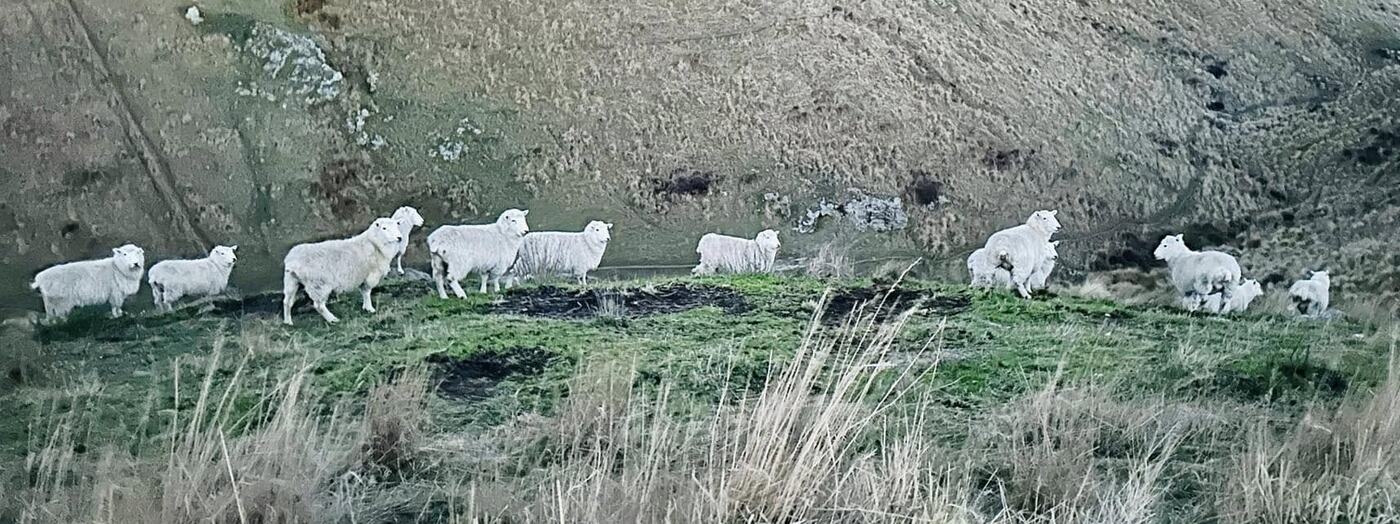
It is entirely about resource recovery and farm remediation, as your farm will be transitioning into a more neutral winter. The severe winds and moisture deficits flatten out, but you are left with the biological and financial hangover.
Sheep and Beef Operations Post El Niño
Sheep and beef operations post El Niño should focus on the following:
1. Soil and Pasture Remediation.
A major El Niño leaves pastures overgrazed, open and prone to weed invasion and topsoil erosion when winter rains finally arrive.
2. Aggressive Autumn and Early Winter Nitrogen.
Do not wait for the soil to completely cool down.
3. Pasture Recovery.
Pasture roots will be severely stunted from summer moisture deficits. Keep grazing rotations longer and avoid hard grazing newly recovered pastures down to the boards. Leaving higher post grazing residuals allows the root systems to rebuild strength.
Capital Stock Management and Tupping Hangover
If El Niño ends in May, your ewes and breeding cows will have gone through their mating cycle during the tail end of the dry conditions, meaning body condition scores may be lower than optimal.
1. Mid Pregnancy Scanning and Segregation.
Scanning is absolutely critical. Once scanned, immediately segregate the ewes and cows by pregnancy status and/or body condition score, giving feed priority to light or multiple-bearing stock. Maintain strict postweaning and tupping culling. Be ruthless with your culls. Subpar capital stock should go. Don’t waste valuable feed or recovering pastures on low-performing animals.
2. Rebuild Stock Numbers Slowly.
Once you know you have the pasture wedge in front of the stock, stock purchases can be made.
Financial and Regulatory Reset
1. Rebalancing the Income Equalisation Scheme.
If you register a self-assessed event with the IRD during the height of an El Niño drought to defer tax on forced livestock sales, you can plan an early withdrawal. Use the deferred funds over winter or early spring to purchase replacement stock or fertiliser to restore farm productivity.
2. Prepare Budgets.
Prepare budgets for the next season based on lower stock numbers, lower production and increased costs. Tax estimates can be filed to reduce any residual provisional tax.
Summary
While all the experts agree that there is an El Niño cycle happening, the size and scale of the cycle are still to play out. However, the effects of the cycle can be mitigated by early planning and putting strategic management and financial plans in place.
Put markers out for the sale of excess stock, remembering that stock prices are still historically high, based on the 2025/2026 season being one of the best seasons in the last 30 years.
International prices for commodities are high, and if stock is capable of being killed and killed early, you will receive good returns.
The risk for farmers in an El Niño spring and summer is not being able to finish stock and having to put stock on the store market. The volume of stock hitting the store market could be quite high, which could mean that prices will drop quickly.
Don’t be frightened to make a decision. Making the wrong decision is often better than making no decision at all.
Maintain regular communication with your advisors, including your accountant and bank manager. Bank managers do not like surprises and when an event such as this occurs, they may also come under increased pressure as many farmers seek additional funding or interest relief.
Still take time out for yourselves and your family. Holidays may be shorter, but they are still important to recharge and maintain your wellbeing.
Although it may be difficult, keep one eye on the next season and consider how you will manage the 2027 winter and maximise the potential of your property post El Niño.